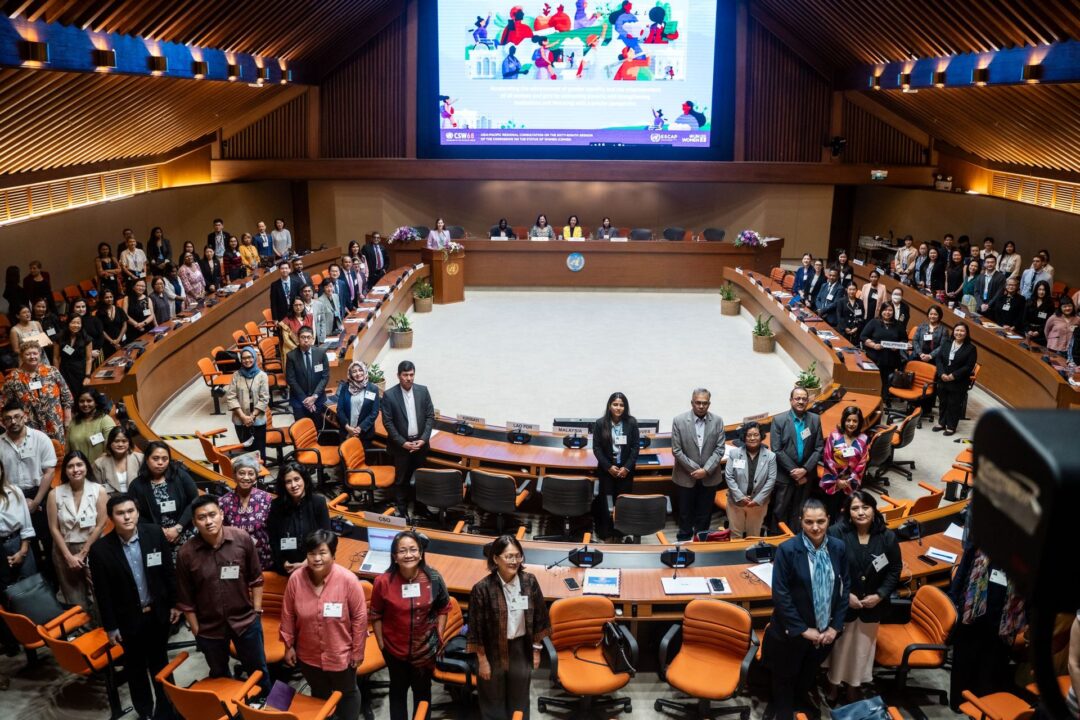
MONFEMNET Joins Regional Discussions Ahead of CSW68
The MONFEMNET National Network participated in the Asia-Pacific Civil Society Organisation Forum and the Asia-Pacific Regional Consultation ahead of the 68th session of the Commission on the Status of Women (CSW68), contributing to regional discussions on gender equality, poverty, financing, and sustainable development.
While countries across the Asia-Pacific region have made progress towards achieving the Sustainable Development Goals, including SDG 3 on good health and well-being and SDG 5 on gender equality, significant inequalities remain. Progress continues to vary not only between countries, but also among different social groups within countries, particularly in relation to sexual and reproductive health and rights, access to resources, and economic opportunities.
Against this backdrop, MONFEMNET joined civil society organisations from across the region to strengthen collaboration, exchange experiences, and contribute to the development of shared regional advocacy priorities.
Discussions focused on a broad range of issues, including understanding the structural and systemic factors that keep women and girls in poverty; exploring economic and social policies that better respond to the rights and needs of diverse groups; and examining current financing gaps in addressing gendered poverty.
Participants also considered how gender-responsive financing mechanisms can be strengthened to support women’s meaningful participation at all levels of the economy and ensure that public financing and development policies respond more effectively to gender inequalities.
The regional consultation provided an important space for civil society organisations to learn from one another, identify common challenges, and bring together their voices in shaping advocacy strategies at both the regional and global levels.
Through its participation, MONFEMNET contributed to collective efforts to accelerate progress towards gender equality and the Sustainable Development Goals in the Asia-Pacific region, while ensuring that the experiences and priorities of women and marginalised communities are reflected in regional policy discussions.