From Power and Activism to Real Change: Days 2 and 3 of the “SASA! Together” Training
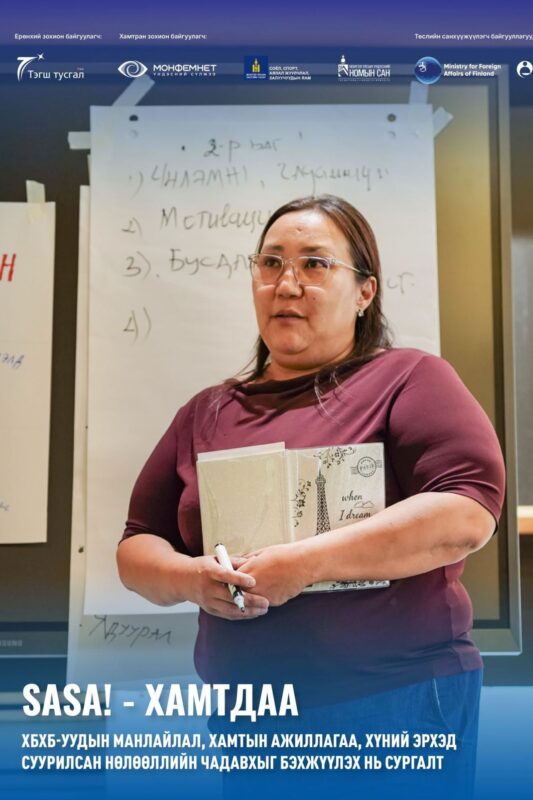
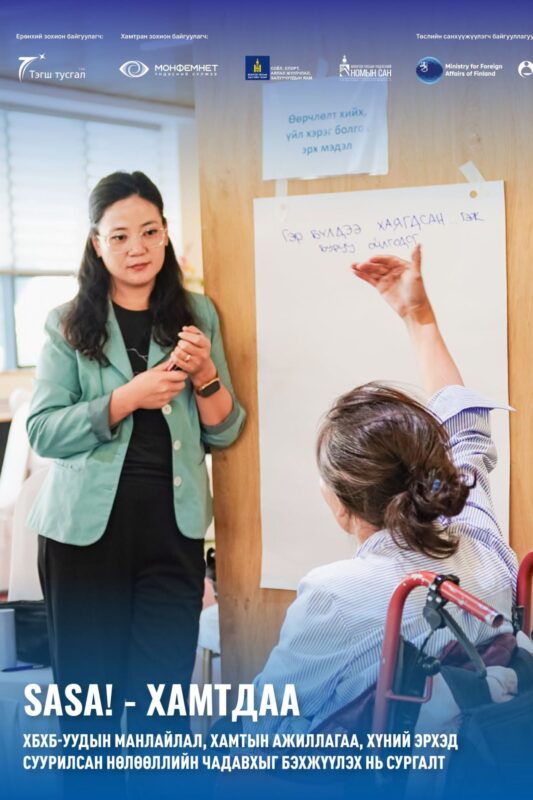
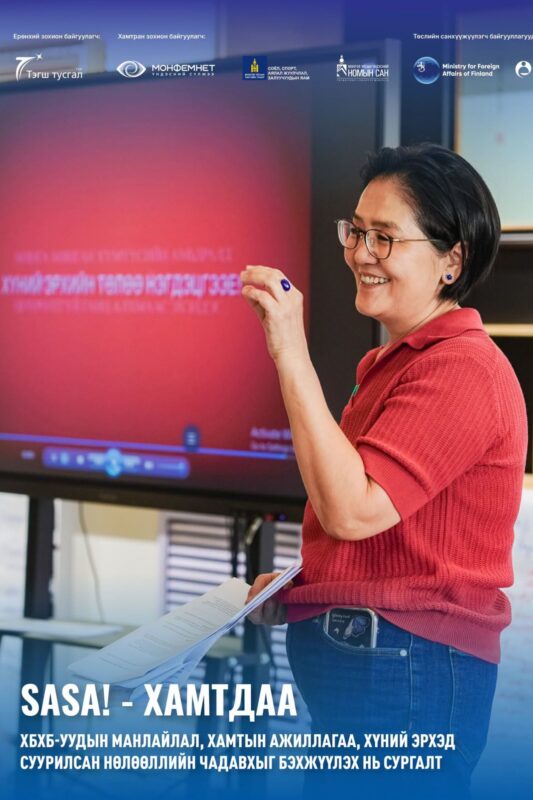
The second and third days of the four-day participatory training “SASA! Together: Strengthening the Leadership, Collaboration and Human Rights-Based Advocacy of Organisations of Persons with Disabilities” focused on power, activism, advocacy, and collective social change.
The training is being organised by the MONFEMNET National Network at the request of Tegsh Tusgal NGO, with the participation of the Ministry of Culture, Sports, Tourism and Youth. More than 20 representatives from organisations of persons with disabilities are taking part.
How does power shape our lives?
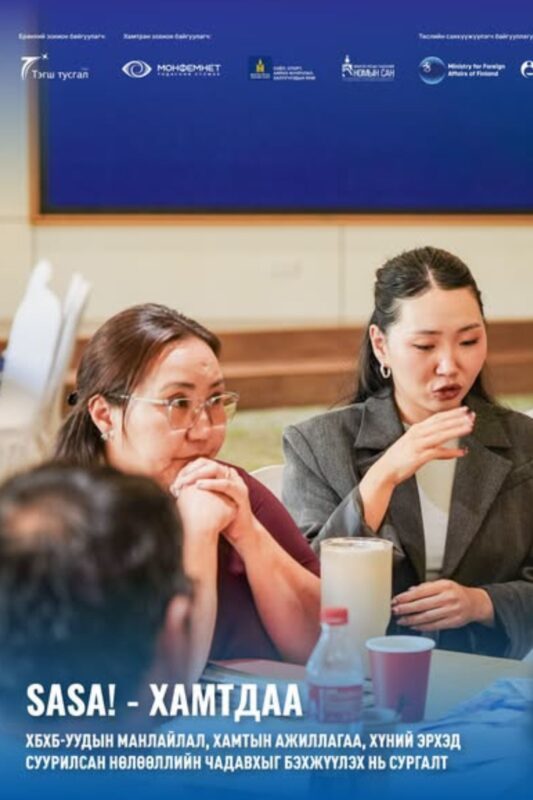
On the second day, participants explored the concept of power through their own lives and experiences.
Through participatory exercises such as “Power in Our Lives,” “Power and Our Experiences,” “Choices with Power,” and the “Power Walk,” participants reflected on why people have different levels of access to resources, opportunities, choices, and participation in decision-making.
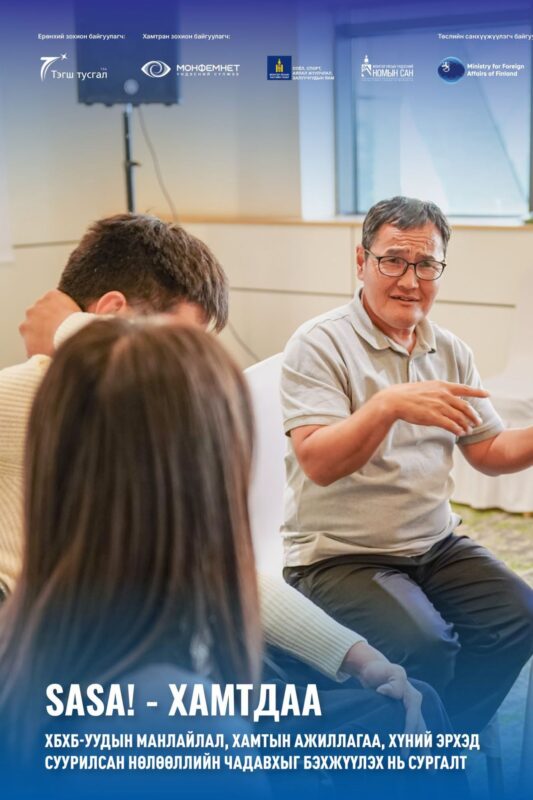
The discussions highlighted that power is not only connected to formal positions or institutions. It is also present in everyday relationships, in the ability to make choices, express one’s voice, influence others, and participate in decisions that affect one’s life.
Participants also explored the connections between social movements, activism, and social change, sharing experiences and ideas on how individuals and organisations can contribute to change within their own spheres of influence.
From activism to results-oriented advocacy
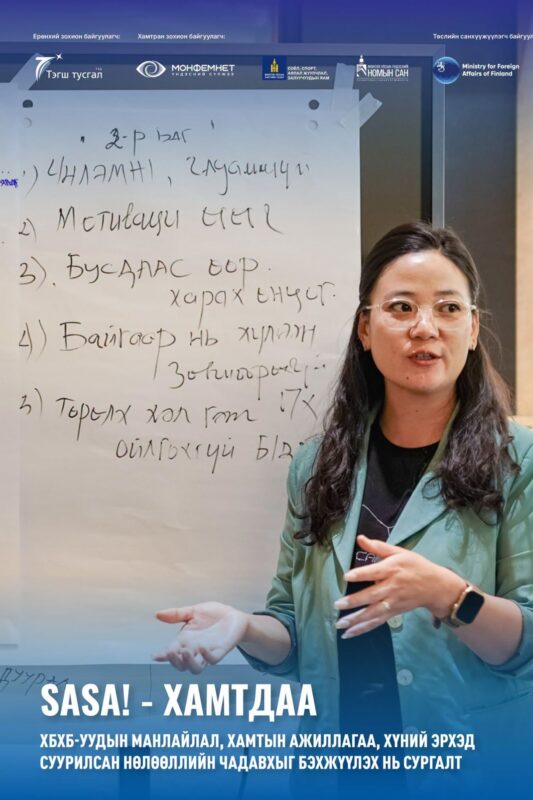
On the third day, participants examined how activism and advocacy can be planned in a more strategic and results-oriented way.
They were introduced to approaches for organising advocacy around clear objectives and stages, and practised identifying leaders, partner organisations, and other stakeholders who could contribute to change within the SASA! Together strategy.
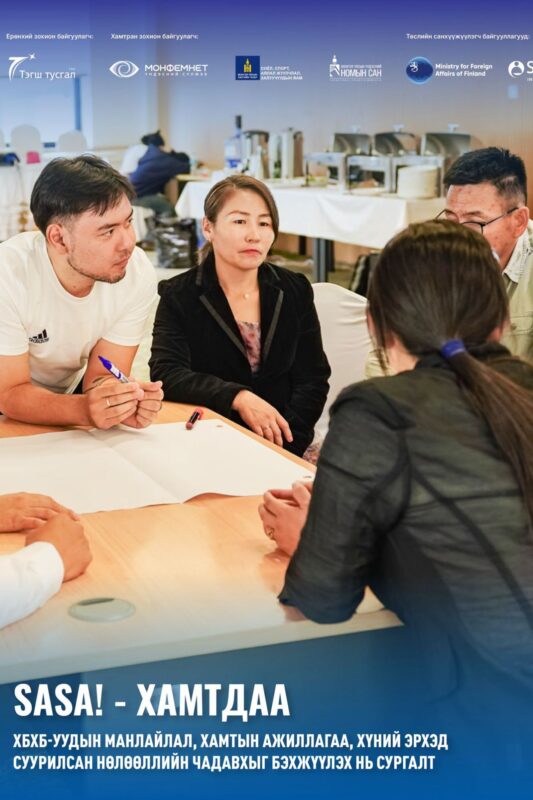
At the end of the day, participants worked in groups to develop creative forms of activism, including movement songs and tongue twisters, exploring how activism can extend beyond formal meetings and discussions.
One of the highlights was a group that performed its movement song in sign language. According to the facilitators, this marked the first time a movement song had been created and expressed in sign language within the SASA! Together methodology.
Across the second and third days, participants moved from examining power and influence to considering how collective action can be directed toward practical and meaningful change.
Social change begins with recognising power, bringing voices together, and taking collective action.