Is Two Years of Online Learning the Right Solution for Herder Children?
Access to education and appropriate learning arrangements for children from herder families has recently become an important topic of discussion in Mongolia. Proposals to allow herder children to study online for a certain period are not simply about choosing a mode of education. They are closely connected to children’s right to education, their development and wellbeing, family life, and unpaid care responsibilities.
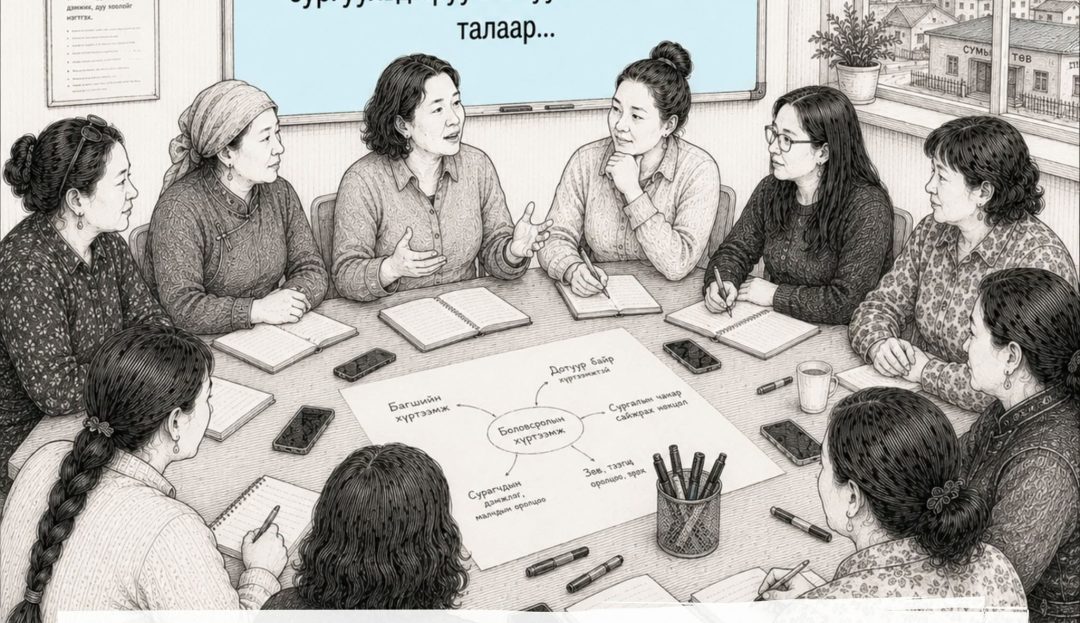
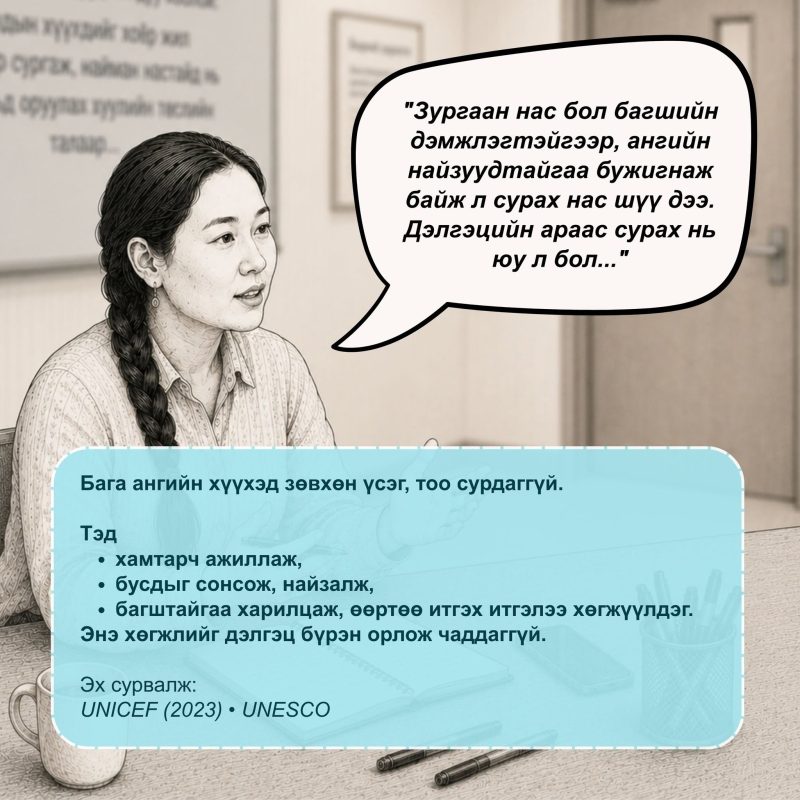
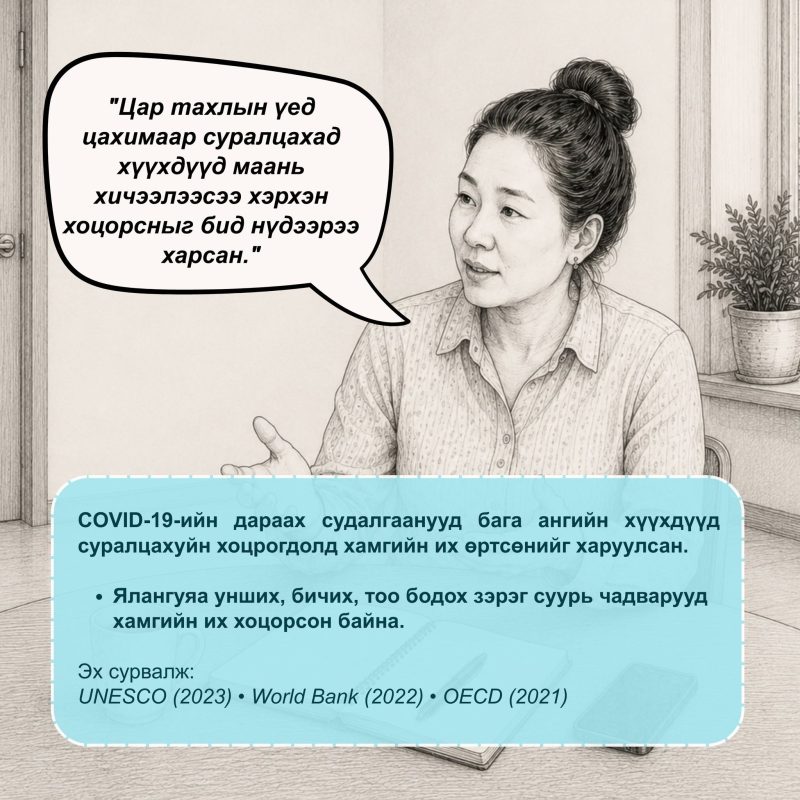
During a consultation held at the soum level, the MONFEMNET National Network listened to the views and lived experiences of herder women on this issue.
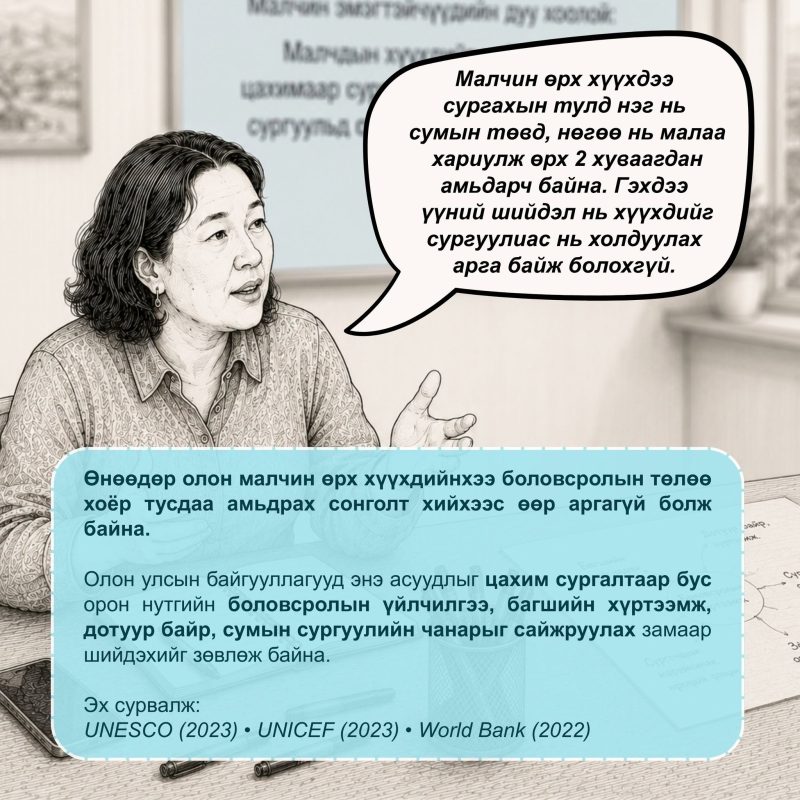
Participants shared how ensuring their children’s education can require families to live in two separate places: one parent, often the mother, stays in the soum centre with the child, while other family members remain in the countryside to care for livestock.
For herder households, sending a child to school therefore involves much more than access to a classroom. Living separately can affect household finances, family relationships, children’s emotional wellbeing and development, while also increasing the care and domestic workload carried by women.
Herder women also raised concerns related to dormitory conditions, children’s safety and development, the quality of education, and unequal access to learning opportunities.
For these reasons, any proposal to introduce online learning for herder children should not be assessed only in terms of technical feasibility or cost.
It is important to consider the child’s age and developmental needs, quality of learning, access to digital devices and connectivity, the availability of adult support, dormitory conditions, family circumstances, and the additional care burden placed on households.
Online learning may provide flexibility in some circumstances, but it should not create new inequalities for children whose families already face geographical, economic, and digital barriers.
This is therefore not simply a question of one draft law or of choosing between online and in-person education.
It is fundamentally a question of ensuring that every child, regardless of where they live, can exercise their right to quality and equitable education.
Through this discussion, herder women shared what these policy choices mean in the reality of their everyday lives. Their experiences and perspectives need to be meaningfully reflected in decisions concerning the future of education for herder children.